How to Listen to a Musical Cast Album
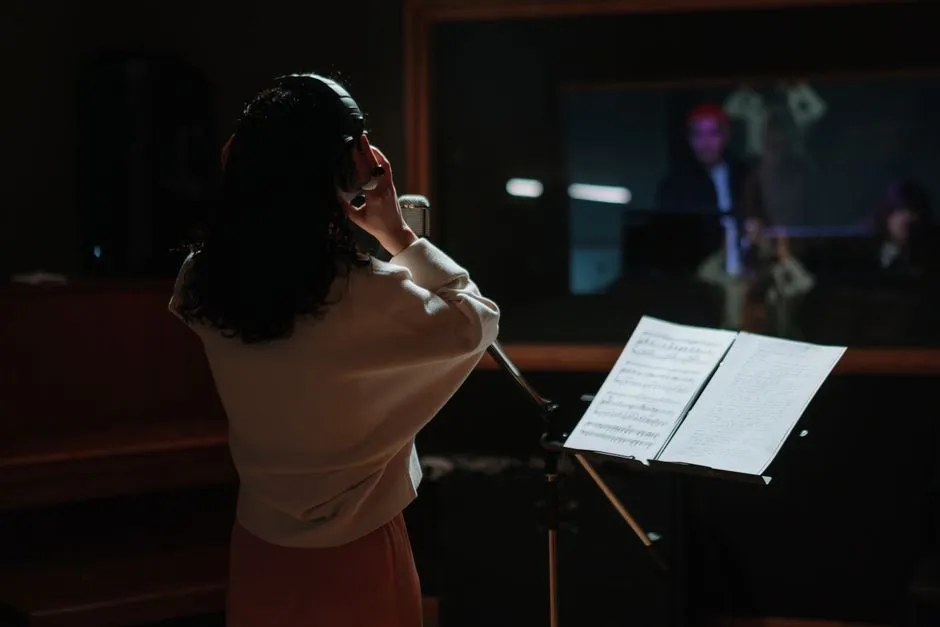
What is a cast album?
A cast album, also called a cast recording, presents songs from a musical through performers connected to a named production or through an ensemble assembled to record the score. It is not automatically a complete audio version of the stage work. Dialogue, transitions, underscoring, dance music, reprises, or songs may be absent or edited, and the recorded production may differ from a revival, tour, film, or licensed edition.
The Library of Congress essay on the original Oklahoma! album gives a concrete historical example: choreography could not transfer to audio, every line of dialogue was not recorded, and an early set was sold as selections. A current Music Theatre International example shows why release and licensed edition must also stay distinct.
| Label | What it identifies | What to verify |
|---|---|---|
| Original cast recording | A release tied to the named original production and cast | Production, year, label, and whether “original” means Broadway, London, or another premiere |
| Revival cast recording | A later production and its cast | Which revival, revised material, and recording date |
| Studio cast album | An ensemble assembled principally to record the score | Edition used, cast, producer, and completeness |
| Concept album | A recording that may precede or exist apart from a full production | Its stated relationship to any staged version |
| Concert recording | A documented concert presentation | Concert, performers, sequence, and edits |
| Film soundtrack | Music tied to a screen adaptation | Screen cast, sequence, orchestration, lyrics, keys, and dramatic context |
Use the release’s own credited title and type rather than forcing every package into one label.
Start with the exact production and credits
Identify the production and release, scan credited writers and performers, and read a reliable synopsis. Check the booklet, official digital credits, or label information for composer, lyricist, book writer, orchestrator, music director, performers, musicians, producer, and recording details. Services may omit credits, so save the release title, year, and label instead of assuming the first search result is the recommended version.
Listen three times: once for story, once for musical detail, and once for one thread such as an instrument, repeated phrase, motif, or character. Browse the listening room for more ways to keep editions and interpretations distinct.
Make a spoiler-aware story map
Choose a spoiler-light synopsis for discovery or a full scene summary for comprehension. List the main characters and what each wants at the start. Beside every track, note who sings, where it appears, and what changes in objective, relationship, or situation by the end.
Dramatic jobs can include introduction, decision, persuasion, confession, conflict, comic release, reversal, montage, reprise, and resolution; one song may do several. Describe its function in your own words instead of forcing every number into a universal category. When the plot jumps, do not invent connective dialogue. Mark the gap and consult a lawfully obtained published libretto, an official synopsis, or licensed material you are authorized to use.
Listen for musical return and change
Notice returning melodies, rhythms, harmonies, lyrics, and orchestral colors. Ask who owns an idea first, who later borrows it, and what changes in tempo, key, texture, or context. A reprise can repeat words while transforming their dramatic meaning.
Use timestamps for private notes, not as claims that every edition aligns; track lengths vary by release and platform. In public discussion, identify the recording and describe audible evidence rather than declaring creator intent without support.
Headphones can reveal detail. The WHO safe-listening guidance recommends keeping a device below 60% of maximum volume, using well-fitted or noise-cancelling headphones, limiting loud-listening time, and taking quiet breaks. Persistent tinnitus or hearing difficulty requires assessment by a hearing professional.
Separate performance from character
Describe audible choices: articulation, phrasing, dynamics, timing, vocal color, interaction, and how the performer shapes a thought. Frame interpretation as “I hear,” “this performance suggests,” or “the pause makes the turn feel.”
Do not infer a performer’s body, private life, health, or character from a recording. Vocal-type labels are not fixed limits, and stylistic choices need production context. Visit the audition workshop when listening becomes repertoire study.
Compare authorized versions with one question
Choose another authorized recording of the same number and compare one element: tempo, orchestration, phrasing, lyric revision, balance, ending, or dramatic emphasis. Confirm comparable material; a film adaptation may restructure or recontextualize the song. “I prefer the faster reading” states preference. “This is the correct tempo” needs stronger support.
Access recordings through an authorized streaming, purchase, or library route. Do not upload or download unauthorized copies. The U.S. Copyright Office explains that there is no fixed safe number of words, musical notes, or percentage for fair use; the analysis is circumstance-specific. Seek permission or qualified legal advice for consequential reuse questions.
Our audition-cut guide shows how to study a song without copying a recorded performance. Return to the full album and ask: what does the score make you expect, and where does the story refuse that expectation? The answer often reveals the recording’s dramatic structure.